Week 41/2026
To conclude the retrospective on Jacques Tati, the Budascoop in Kortrijk will be holding several screenings of Playtime (1967), a feature film which the director himself described as the ultimate expression of his personal style. Monsieur Hulot (Tati’s fictional alter ego) finds himself in a hypermodern version of Paris which has fallen prey to the uniformity of the contemporary age. Naturally, Hulot gets hopelessly lost in this alienating environment; he pins his only hope on an American tourist named Barbara, who shows glimpses of individuality and, more importantly, of creativity.
In Innocent Sorcerers, a Polish drama from 1960, a girl is presented as the object of desire. She is seen through the eyes of a womanizing doctor who also plays the drums in a jazz band, conveniently providing him with an opportunity to pick up girls. He has difficulty reading this particular young woman, however, as she persists in a mysterious and stubborn attitude – starting with her name, which she refuses to share. For this one night, they both decide to take on different names: they will be “Pelagia” and “Bazyli” to each other. In Bazyli’s room, they play games and have conversations, activities that become interchangeable over the course of the night.
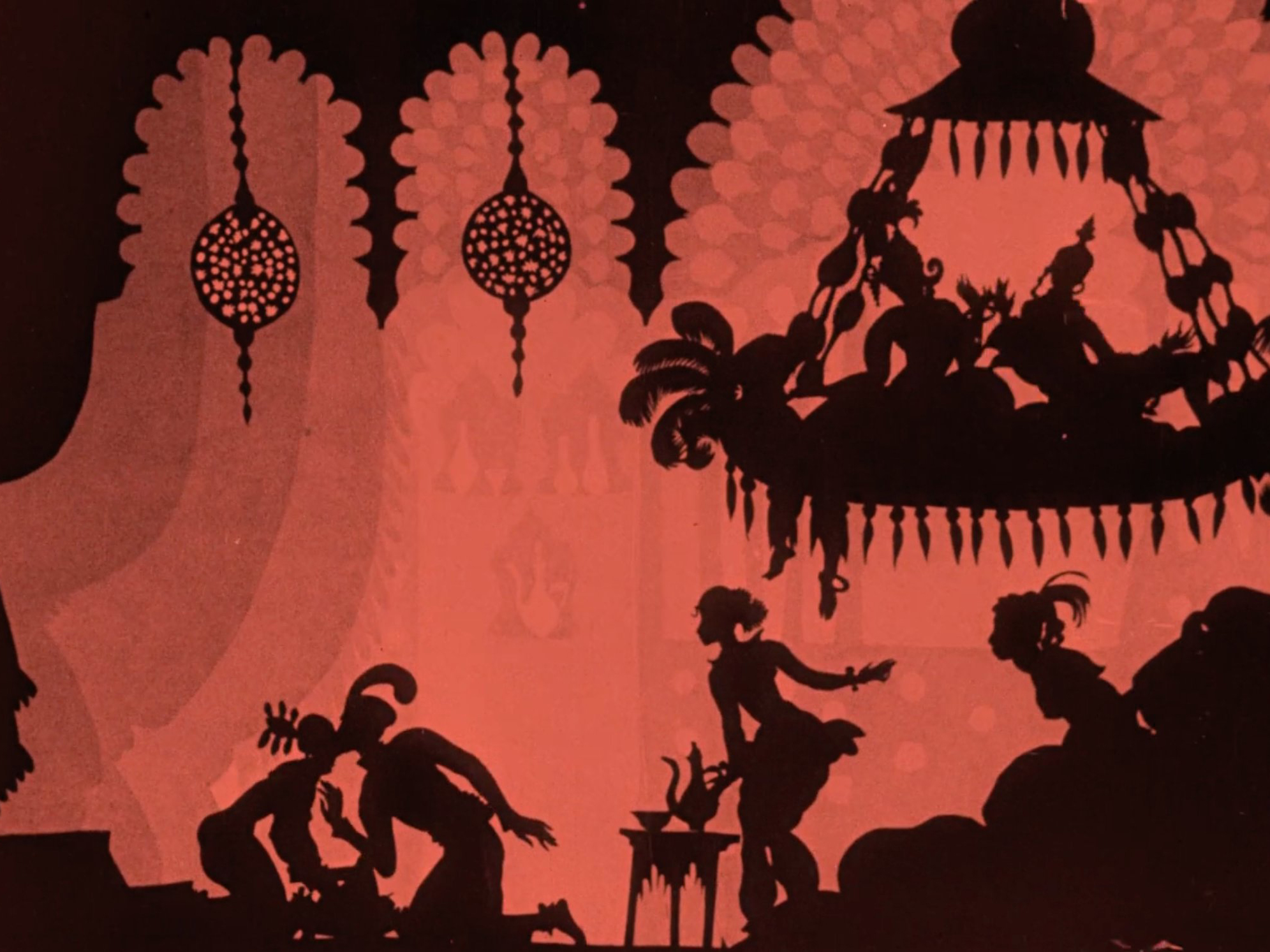
Preceded by a lecture on pre-expressionist and expressionist film, De Cinema is screening Die Abenteuer des Prinzen Achmed (1926) by animation pioneer Lotte Reiniger. It is the oldest surviving animated feature film, drawing inspiration from several stories from One Thousand and One Nights, which Reiniger weaves together in her recognizable, fairytale-like style. The main plot line is the love story between Prince Achmed and Pari Banu, the ruler of the land of Wak Wak, who is brutally abducted, chased down by demons and ultimately sold to an emperor. Luckily, with a little help from a benevolent witch, Achmed is always willing to fight for his true love.